

Home > Information > AI predicts IDH mutation status from brain tumor MRI
AI predicts IDH mutation status from brain tumor MRI
August 24, 2026
The National Cancer Center Japan, in collaboration with RIKEN, Tokai University, and multiple medical institutions across Japan, evaluated the potential of artificial intelligence (AI) to predict IDH (isocitrate dehydrogenase) mutation status in brain tumors from magnetic resonance imaging (MRI), offering a less invasive approach than conventional diagnostic methods such as biopsy.
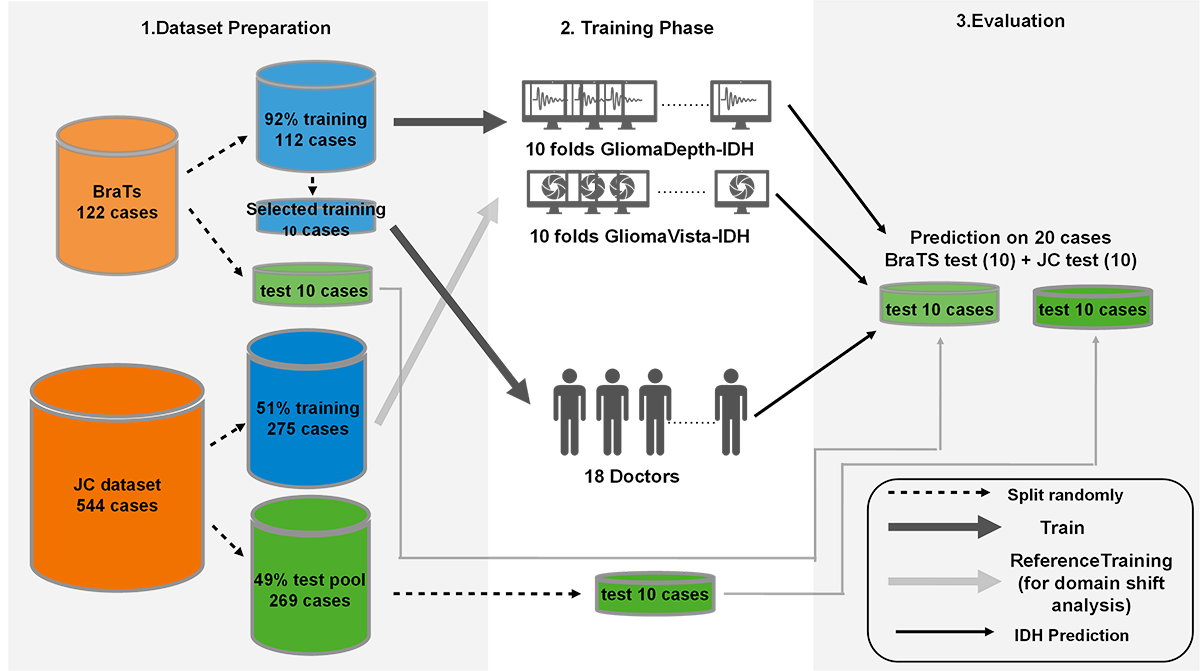
Gliomas are common brain tumors whose classification, prognosis, and treatment response are strongly influenced by molecular characteristics, particularly IDH mutation status. In this study, the research team developed two AI-based image analysis models using conventional and more recent image-recognition technologies. The models were trained and evaluated using MRI data from both non-Japanese and Japanese patients, and their performance was compared with predictions made by 18 physicians and other specialists involved in brain tumor care.
The AI models showed high predictive accuracy when tested on an overseas brain tumor imaging dataset. However, their performance declined when applied to Japanese patient data, raising concerns about the reliability and generalizability of AI predictions across different patient populations. In addition, some highly experienced physicians achieved predictive accuracy comparable to that of the AI models.
These findings suggest that AI-based prediction of IDH mutation status may support clinical decision-making in glioma care, while also highlighting the need for careful validation across diverse patient populations before such systems can be introduced into routine clinical practice.
Related Japanese press release: https://www.ncc.go.jp/jp/information/pr_release/2026/0715/index.html